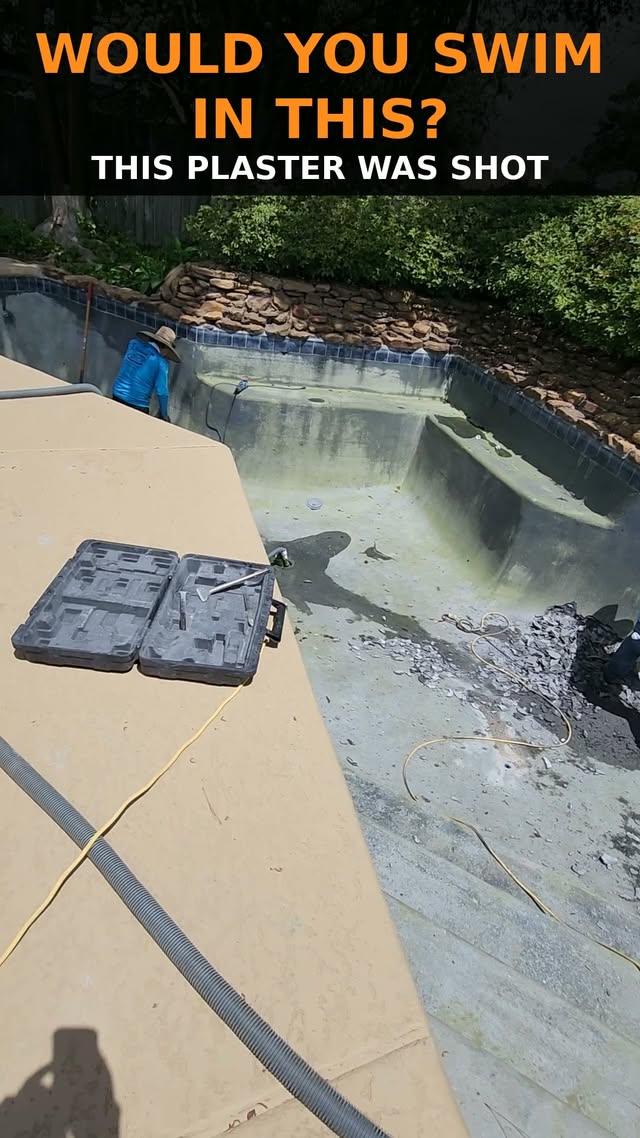
Standard plaster is a 7-to-10-year surface in most pools — and Louisiana heat works it hard. Here's how to tell where yours stands, how to stretch it, and what to do when it's done.
★ 4.7 stars·8,000+ followers·10M+ views
It depends on the finish:
Those are general ranges across the industry, and the single biggest variable is water chemistry. Plaster is a cement surface — acidic, unbalanced water literally etches it away, while balanced water lets it live out its full life. Down here, a pool that runs year-round in Louisiana heat and sun is working harder than one up north that gets winterized half the year.
Sometimes. Keep the water balanced — low pH etches plaster, high pH scales it — brush weekly, and stay on top of leaks so water isn't moving behind the surface. An acid wash can pull some staining out and buy a little time, but it works by dissolving a thin layer of the surface, so it shortens what's left even as it cleans. Think of it as a short-term move, not a reset.
One isolated chip or a single stain spot? A patch can make sense. But when the roughness, staining, or peeling is everywhere, patching is chasing a surface that's done — you'll be back fixing the next spot in a few months. Replastering takes the pool back to a sound surface and gives you a whole new finish with a whole new clock on it.
Most gunite pools replaster from $10K, and the average job is done in 7–10 days. If you're weighing it, the replastering cost guide breaks down what drives the price, and the replastering page covers how the job goes. Not sure where your plaster stands? Call or text Rex at (225) 276-8115 — he'll tell you straight whether it's got years left or it's time.
How long does replastering take? 7–10 days on average for most gunite pools.
Does the finish change how long it lasts? Yes — pebble and quartz finishes generally outlast standard white plaster, which is part of why they cost more.
Can a fiberglass pool be replastered? No — fiberglass is a different surface and can't take plaster. That's a gelcoat conversation, and be wary of anyone who tells you otherwise.
Leave your name and cell — Rex himself calls you back. No call center, no salesman.
Got it
Thanks — Rex will call you back.
